

HARD TALKS WILL BE HELD HERE


Six Persian female referees will officiate matches across three groups during the Asian Under-17 Girls' Championship qualifiers.
 |
 |
Thursday, October 30th 2025 8:46:08 AM



As AI agents access files, use tools and take action across enterprise systems, the risks to sensitive data are growing.
Join MIT Technology Review on October 13 for a LinkedIn Live, hosted in partnership with Cyberhaven.
This session will explore why data lineage is becoming a critical foundation for AI security, how agentic workflows are changing enterprise risk, and what organizations need to consider as they enable AI adoption while protecting their most sensitive information.
Register for FREE: https://trib.al/odsIlJY
|
 |

ALWAYS 💯 ORGANIC “SPONSORED ZERO”

The following metrics are made during 2024-25 and 2026 metrics were registered at least 10X more visitors increasingly everyday!

Sunday, September 1, 2024 11:35:44 PM

Tuesday, July 22, 2025 2:40:58 PM
 |
 |




Ms. Fateme Yoosefi | Ferdowsi State University

 |
|
 |
|

Open governance, AI-built infrastructure and public sector open source adoption headlined Open Source Summit Europe Day 3, wrapping up with a look back at 35 years of Linux from Linus Torvalds.
WARM REGARDS FROM PARS ENTERPRISE ❤️🔥


 |
 |
|
 |
 |
Dr. Hassan Fazeli Nashli is a full professor of the Department of Archaeology at the University of Tehran. He was born in the village of Nashli, Amol County, Mazandaran Province. continue…
The Hard Core of Iranian Political Thought
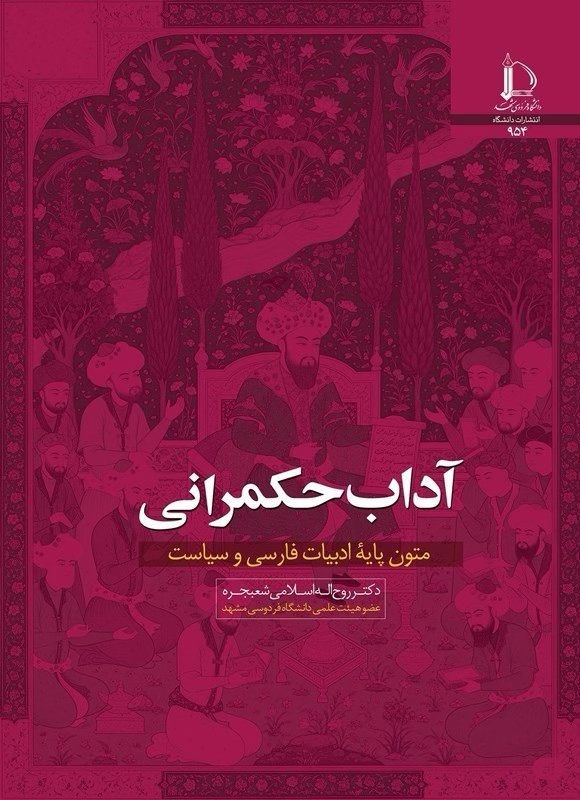
On the Book The Ethics of Governance: Foundational Texts of Persian Literature and Politics
In The Ethics of Governance: Foundational Texts of Persian Literature and Politics, Ruhollah Eslami presents an analytical and interdisciplinary study that rereads the heritage of Persian literature as a foundation of the Iranian humanities. The author argues that “the humanities in Iran are Persian literature” and maintains that the roots of political thought, the ethics of power, and approaches to just governance should be sought in the historical layers of the Persian language and literary tradition.
The book represents a return to Iran’s intellectual heritage from antiquity to the contemporary era—a heritage shaped by the interrelationship of politics, ethics, wisdom, and literature, and preserved in enduring texts ranging from works of wisdom and counsel to writings from the Constitutional period.
In the introduction, the author emphasizes the importance of the “continuity of the Iranian rational tradition,” a continuity that, in Persian literature, has not merely been narrated but institutionalized. In Eslami’s view, Persian literature embodies a language of tolerance, avoidance of harming others, and an invitation to rational thought—a language that restrains power and reinforces ethics. Accordingly, understanding the traditions of statecraft and the logic of government in Iran is impossible without examining its literary texts, since literature has historically served a political and social function in Iran. Mirrors for princes, historical chronicles, and ethical treatises have been among the principal foundations of the Iranian conception of governance.
The book is organized into several chapters, each devoted to major thinkers and foundational literary-political works in Iran. The first chapter introduces the principles of governance in classical Persian literature. By examining texts such as Minui Khirad, ancient advice literature, and the tradition of Nasihat al-Muluk (Counsel for Kings), the author demonstrates how state formation in Iran was grounded in the ethics of power, experiential wisdom, and spiritual order.
The following chapter examines the works of Khwaja Nizam al-Mulk Tusi and his role in the institutional development of the Seljuk state. Eslami considers Nizam al-Mulk’s Siyasatnama (The Book of Government) one of the early classical texts on public administration, in which security, justice, and the organization of the bureaucracy are defined as fundamental principles of governance.
The third chapter focuses on Ala al-Din Ata-Malik Juvayni and his important work, Tarikh-i Jahan-Gusha (The History of the World-Conqueror). The author describes the work as a reflection of Iranian political thought in confronting the crisis caused by the Mongol invasion. The chapter demonstrates how Juvayni’s historiography combines politics, ethics, realism, and historical wisdom.
|
The fourth chapter is devoted to the Qabusnama and the tradition of writing books of advice. The work addresses political education, the ethics of power, practical wisdom, and the principles of governance in connection with everyday life.
The next chapter examines Ubayd Zakani and his Akhlaq al-Ashraf (The Ethics of the Nobility). Through his sharp satire, Ubayd criticizes political corruption, elite hypocrisy, and the inversion of the moral foundations of power. Eslami shows how Ubayd, through satire and ambiguity, produced one of the most serious critiques of those who exercised power in Iranian history, a critique that the author considers relevant to the analysis of contemporary governance.
The book then turns to the treatises and writings of the Constitutional period, examining the role of thinkers of that era in transforming traditional political ethics into a theory of the modern state. During this period, concepts such as law, freedom, public participation, and the rule of law entered Persian political writing, giving the ethics and practices of governance a new meaning and structure.
Throughout the book, Ruhollah Eslami argues that Iranian intellectual currents, from antiquity to the Constitutional period, consistently confronted various forms of anti-Iranian sentiment and sought, through literature, to restrain power and reconstruct the principles of governance.

He emphasizes that Persian literature is not merely an art form but a “living political tradition” that has shaped the logic of Iranian governance. From the author’s perspective, returning to this intellectual heritage is essential for understanding contemporary governance, since many of the present-day crises of politics and government in Iran stem from a rupture with this tradition and the neglect of classical political literature.
The Ethics of Governance is an analytical and critical work grounded in textual studies. It is particularly relevant to researchers in political science, Persian literature, historical sociology, and those interested in the development of Iranian political thought.

Written in an accessible yet research-based style, the author builds a bridge between literature and politics and demonstrates how texts such as Minui Khirad, The Testament of Ardashir, Nizam al-Mulk’s Siyasatnama, Juvayni’s Tarikh-i Jahan-Gusha, the Qabusnama, Akhlaq al-Ashraf, and the political writings of the Constitutional period contributed to what the author describes as the hard core of Iranian political thought.
The book was published by the Scientific Works Publishing Group. Its author is Dr. Ruhollah Eslami Shabjareh. The first edition was published in autumn 1404 (2025) and consists of 200 pages.
Further information about the book and related publications is available through the publishing portal of Ferdowsi University
The Development of the Iranshahr Concept in the Politics of Ardashir-e Babakan
Abstract: The Sassanid Empire represents one of the golden and illustrious eras in Iranian history. Its founder, Shahanshah Ardashir-e Papakan, emerged from Pars with the mission of restoring the Iranian realm and the Zoroastrian faith—a duty he undertook by drawing upon the invaluable legacy of the Achaemenids and the concepts found in the Avesta. Recognizing the chaotic political and religious conditions that characterized the late Parthian period, he initiated a program of reform and innovation. Through the reorganization of fire temples, the restructuring of governance and administrative systems, and the establishment of social classes and hierarchies, he breathed new life into a wounded Iran. Some have characterized him as a cunning *mobad* (priest) who exploited religion as a weapon to seize power—alleging that, beyond dismantling the Parthian dynasty, he persecuted other faiths and peoples. However, historical and religious evidence suggests otherwise; such baseless, imported narratives hold no scholarly or historical merit. Following the political instability of the Parthian era, Ardashir-e Papakan rose to power guided by the concept of the integration of religion and kingship. This vision not only linked these two distinct spheres within the Shahanshah’s own character and worldview, but also positioned the Shahanshah himself—standing above the religious clergy—as the manifestation of Ahura Mazda’s will for the governance of the divine land of Iran. This political innovation served as the catalyst for the emergence of the political concept of "Iran" and the flourishing of the Sassanid era; it ensured the territorial integrity and the established royal and religious hierarchies, thereby securing the stability of the empire for many centuries.
The Rise of Ardashir Papakan and the Emergence of the Sassanids
Following the fall of the Achaemenids and the rise of the Seleucids and Hellenistic culture, the Iranians consciously preserved their national, religious, and cultural identity. This is evidenced by the "Iranism" of the Sasanians and the formal establishment of the Iranian religion—Zoroastrianism—as the state faith. This commitment is reflected in a wide array of manifestations: from the imagery found on the coins of the *Frataraka*—depicting *panam*-wearing Magi, fire altars, and blazing fires (Jalilian 1396: 6–9)—to a depiction of an Iranian figure executing a Greek soldier (Moreno 2023: 12). It is also seen in the enduring presence of the Anahita fire temple at Istakhr in Persis (Pars), which dates back to the reign of the Achaemenid king Artaxerxes II and later served as the religious and social stronghold for the House of Sasan during the rise of Ardashir Papakan. Throughout the five-century span between the death of Darius III and the rise of Ardashir Papakan, Persis functioned much like an island, keeping Iranian traditions, rituals, language, and culture alive (Ghirshman 1374: 270; Jalilian 1396: 7).
During the Achaemenid era, it was believed that the history of the world comprised four empires: the Assyrians, the Medes, the Babylonians, and the Persians. It was held that the Persian Empire would endure forever; however, the invasion of Alexander shattered this conviction. In the subsequent Hellenistic period, Iranians looked forward to the arrival of a liberator who would restore the glory and grandeur of bygone eras. Toward the end of the Parthian period—on the eve of the rise of the Sassanids—a movement toward a distinct national culture emerged. This involved a reciprocal relationship between religion and the homeland, standing in contrast to the relatively pluralistic, Hellenized culture of the Parthians. The result was the crystallization of a robust national culture (Movahedinia & Mehrabani 1401: 7). As stated in the *Denkard*: "Lord Ardashir, King of Kings, son of Papak, rose up to restore the kingdom of Iran" (Shapour Shahbazi 1396: 20).
Tabari writes: "Ardashir, son of King Papak—a righteous monarch—arose, ostensibly to seek vengeance for his kinsman, Daryan (Dara)—son of Bahman, son of Esfandiar—the very man against whom Alexander had fought. He proclaimed his intention to return the kingdom to its rightful masters and, as in the days of old—before the era of the 'petty kings' (*muluk al-tawa'if*)—to unite the realm once more under the command of a single leader and a single king" (Tabari 1352: 580). Al-Tha‘ālibī further states that Ardashir wrote letters to the local rulers (*mulūk al-ṭawā’if*), calling upon them to submit and explaining his intention to unify Iran (Al-Tha‘ālibī al-Marghanī 1372: 278). In these letters, Ardashir wrote: "I, Ardashir—whose rightful position was usurped by another, and whose ancestral heritage was lost to defeat—address [such-and-such] a ruler. Peace be upon you, insofar as you recognize the rightful duty that rests upon you. To proceed: the most worthy pursuit to which one should dedicate oneself and direct one’s judgment is the rejection of injustice and the seeking of what is rightfully due... I intend to reunite that which has been scattered, to fortify the foundations of the state—which have grown weak—and to quell all strife... You, O local rulers, are well aware that my ancestors were men of praiseworthy conduct and noble legacy, and that sovereignty was rightfully theirs... Now, I am the successor to those forebears, seeking to reclaim their rights and to govern according to their exemplary conduct" (Miskawayh al-Rāzī 1373: 178). Ardashir Papakan’s claim regarding the reclamation of a usurped kingship—and its restoration to its rightful holders—parallels the claim made by Darius the Great in the Behistun Inscription: "The kingship which had been taken away from our lineage, I brought back to its proper place; I established it in its original position... I restored the people to their rightful places, and returned both Persia and the other lands to their former state... By the grace of Ahura Mazda, I strove until I restored my [royal] lineage to the very position it had held in the past" (Shapur Shahbazi 1398: 232).
In the account provided by al-Tabari, Sasan—the grandfather of Ardashir—is portrayed with a dual identity: he was a warrior, a hunter, and an equestrian, while also serving as a guardian of the Anahita fire temple in Istakhr, Fars. In his Persian translation of al-Tabari’s *History*, Bal'ami adds that although Sasan was not a king, he served as the chief over all the villages and rural settlements of Istakhr. Following his death, his son Papak (Babak) assumed these responsibilities, overseeing the affairs of the inhabitants of these villages as well as the maintenance of the fire temples throughout the region of Istakhr (Bal'ami 1385: 611; Jalilian 1396: 14–15).
The sanctuary of Anahita held great significance as early as the Achaemenid period, and likely even earlier. The fire temple of Anahita (or Nahid) in Istakhr housed a sacred fire dedicated to Anahita—a goddess revered as a patroness of women and the family, a bestower of victory and wisdom, a nurturer of the dawn, and a provider of livestock. In an inscription by Shapur I on the *Ka'ba-ye Zartosht*, his daughter is named "Adur-Anahid," which translates to "the Fire of Anahita." Furthermore, in the inscription of Kartir, it is noted that Bahram II appointed Kartir as the custodian of the fire of the goddess Anahita in Istakhr. Ardashir and Shapur even offered the severed heads of their enemies to this very fire temple (Shapur Shahbazi 1398: 235).
Moreover, the city of Istakhr served as a vital religious and political center during the Achaemenid era—a status it retained throughout the Parthian period—at which time the region was governed by the Bazrangi dynasty. During this era, the Anahid temple in Istakhr retained its former prominence and commanded the respect of kings; the "Atur Anahid"—or the "Fire of Anahid"—continued to burn within it (Bayani 1383: 11; Tabari 1352: 580–582; Bahramian 1398: 2).
If the account provided by Bal'ami is accurate—stating that "Sasan swore an oath that should he ever attain the kingship, he would purge the earth of the Parthians; yet Sasan died without attaining the throne, and thus charged his son to fulfill this oath—to slay the Parthians—or, should he also fail to attain the throne, to instruct his own descendants to carry out this oath" (Bal'ami 1385: 618)—then it must be inferred that the Sasanians harbored ambitions to rule over Iran as early as this period (Jalilian 1396: 14).
A significant point emerging from the accounts of Tabari and Bal'ami is that Sasan—the ancestor of Ardashir-e Babakan—was not a *mobad* (Zoroastrian priest); rather, he served merely as the custodian of this fire temple and possessed knowledge of religious matters. Consequently, it remains plausible that Ardashir-e Babakan was not a *mobad*—contrary to the claim in Dinavari’s *‘Uyun al-Akhbar*, which refers to him as "Ardashir al-Mobadh"—but instead served within the context of this fire temple. Dinavari’s *‘Uyun al-Akhbar* stands as the sole source to designate Ardashir-e Babakan as a *mobad*; in no other historical or religious text is he described as such.
In connection with the claim of the first Sassanid kings to the Achaemenid heritage, Shadarvan Alireza Shapour Shahbazi has started a valuable research with the same name and while criticizing Ehsan Yarshater's article titled "Were the Sassanids the heirs of the Achaemenids?" And rejecting his arguments, he has investigated the correct reasons for this claim, the most important of which are:
1. Mani (self-proclaimed prophet) called Ardeshir I Dara-Ardeshir. All Achaemenid kings after Xerxes were named Darius and Ardashir. Adopting the second name should be a conscious attempt to connect Ardeshir Babakan with the Achaemenid family. The fact that the name of Cyrus was not used in the Sassanid Empire is not a decisive reason.
2. Ardeshir has depicted his image in the Queen's Palace in Persepolis and on the Rock of Rostam near the monument of Darius the Great and his tomb.
3. Some of Ardeshir's statements are very close to the words of Dariush's epitaphs and remind them that it is impossible to assume this similarity by chance. Dariush says in the inscription of Biston: "I raised the king that was taken from our seed. I established it in its place... as it was before... I have this kingdom by the will of Ahura Mazda. As Tabari said: "Ardeshir wanted to restore the kingdom to his people... God gave me the crown that I put on my head and opened provinces".
4. Ardeshir represented himself as a representative of God in the petroglyphs of his royal insignia: Ahura Mazda chose him. granted him the kingdom. This choice was actually a long wait for the people of Iran. The rest of the reasons can also be followed in this research (Shapour Shahbazi 2016: 25-11).
It is therefore evident that the Sasanian dynasty was aware of the Achaemenid Empire. Drawing upon this historical memory—and by establishing a social base centered around the Anahita fire temple—they sought to unify the land and re-establish an Iranian empire.
Sources concerning the birth and early years of Ardashir differ significantly on many points. According to an account cited by al-Tabari, he hailed from an aristocratic family in Fars; he was born in the village of Khayr (in the Estahban area), located within the district of Tirrudh—part of the *kura* (province) of Istakhr—on the southern shore of Lake Bakhtegan (Al-Ebrahim 1387: 19). His grandmother, Rambhesht, is said to have descended from a princely lineage known as the Bazrangids (the rulers of Istakhr during the Parthian era). Ardashir’s father, Papak (or Babak)—the son of Sasan—was his successor in the "governance of the people."
A second account can be derived from the inscription of Shapur I on the *Ka'ba-ye Zartosht*. This inscription refers to Sasan as a "lord" (*khwadāy*), though it does not explicitly identify him as the father of Papak. A third account appears in the *Kārnāmag-i Ardashīr-i Pābagān* ("The Book of the Deeds of Ardashir, Son of Papak"); this same narrative is echoed in Ferdowsi’s *Shahnameh*, and a version of it is also recounted by the historian Agathias. According to this version, Babak—a local ruler—learned that Sasan was a descendant of Dara (Darius III, the Achaemenid king). Consequently, Babak gave his daughter in marriage to Sasan, and Ardashir was the child of this union. Thereafter, however, Sasan disappears from the narrative, and Babak is treated as Ardashir’s father (Wiesehöfer 1985: 1–2). At that time, Papak—Ardashir’s father—obtained permission from Gochihr (the King of Istakhr during the Parthian era) to place his son under the guardianship of Tiri, the commander of the fortress of Darabgerd. Following Tiri’s death, Ardashir succeeded him and gradually expanded his influence. He eliminated several local rulers and urged his father to overthrow Gochihr. After toppling Gochihr—and following the Parthian King of Kings' opposition to the rule of Shapur (Papak’s eldest son and Ardashir’s brother) over Istakhr—Papak launched an open rebellion. The uprising began with the overthrow of the King of Istakhr; subsequently, the territory was consolidated, and its independence from the Parthian monarch was declared.
By 224 AD, Ardashir had extended his dominion throughout Persis (Pars) and beyond, reaching as far as Elymais—encompassing Khuzestan and Kerman. He compelled many local kings and Parthian vassals to submit. Ardashir’s political proclamations and propaganda—including his letters to local rulers—coupled with his military victories, likely persuaded many individuals to tie their own fortunes to the success of this movement.
The decisive battle between the Parthians and the Sassanids took place on April 28, 224 AD, on the plain of Hormozdagan in the land of Media. This date is also corroborated by epigraphic evidence from Shapur found at Bishapur. Ardashir commissioned a rock relief depicting this battle at Firuzabad (Ardashir-Khwarrah), carved into the cliffs along the western bank of a mountain river known as the Tang-ab. Following his victory over Artabanus V on the very battlefield, he adopted the title "King of Kings," which marked the beginning of his reign.
Although this victory was highly significant, it did not mark the end of the Parthian era. Ardashir-i Papakan still faced a formidable path ahead; vast portions of the Parthian realm—including Mesopotamia, Azerbaijan, Armenia, and numerous territories in the east—remained under Parthian control (Wiesehöfer 1985: 4–6; Nöldeke 1378: 433; Jalilian 1396: 46–47; Shapur Shahbazi 1398: 99).
It appears that Ardashir realized a policy of reclaiming lost territories could not succeed without first stabilizing the internal situation of the empire. The reliance of the central Arsacid government on local magnates and tribal leaders—who had secured a degree of autonomy to serve their own aristocratic and tribal interests—had effectively paralyzed foreign policy for two centuries. This internal instability repeatedly provided dangerous adversaries, most notably the Romans, with opportunities to exploit the situation. Only by eliminating most of these local rulers and establishing a new, centralized, and bureaucratic system could the existing military balance and territorial structure be transformed.
One of the major achievements of the Sasanian state—spearheaded by Ardashir-i Papakan—was the establishment of permanent administrative bodies that received directives from the center and served as a link between the central government and the provinces. This administrative apparatus was built upon such a solid foundation that it remained intact even after the Arab conquest, and its legacy can still be observed today (Wiesehöfer 1985: 5; Bayani 1383: 50). "Ardashir Papakan assumed power at a time when Iranian society—since the second century AD—was enduring a critical situation. This crisis stemmed from the political instability inherent in the Parthian 'feudal' (or *muluk-al-tawa'ifi*) system, characterized by a weakening central authority, the growing power and prerogatives of aristocratic clans, the frequent emergence of pretenders to the throne, persistent warfare on both the eastern and western fronts—most notably a series of defeats against the Romans—the outbreak of widespread epidemics, and the unbridled religious tolerance practiced by the Parthian kings."
According to Max Weber, the third type of domination—rooted in the people's heartfelt belief in a political figure, encompassing all their personal traits and actions—is termed "charismatic domination." In Weber’s view, the concept of "charisma" applies to an individual whose personality stands distinctly apart from others due to specific, unique attributes. Possessing these qualities—bestowed, in this context, by the Divine—grants the individual exceptional, superhuman capabilities; it is for this reason that such figures are recognized as leaders (Najafabadi & Bahrami 1399: 4–12).
"However, the most significant component of charisma-based legitimacy—namely, the absence of an administrative structure under charismatic rulers—is entirely absent in the Sassanid state." In reality, the legitimacy of Ardashir Papakan was rooted in *farrah*-based (divine-glory-based) authority, which differs structurally from what is defined as "charismatic domination" (Matlub-Kari 1399: 182).
«Ardashir succeeded in proposing and implementing solutions to overcome the critical situation facing society. These internal problems stemmed from the specific political structure of the Parthian regime, which resulted in a lack of national unity and cohesion. The prevalence of disorder, conflicts, and rifts within the power structure—which created fertile ground for provocations and wars by external enemies such as the Romans—led the Iranian people to desire a strong government capable of establishing order and social-political cohesion to surmount the society's crises. Ardashir’s innovations in addressing these critical conditions included a special focus on the Zoroastrian religion and the promotion of a policy uniting religion and state; the introduction of new diplomatic claims that opened a fresh chapter in Iran-Rome relations; the establishment of order among social classes; and the undertaking of infrastructure and urban development projects. These strategies were largely continued by Ardashir’s successors; indeed, in the sixth century CE—while confronting the crises that gripped Iranian society following the Mazdakite upheaval—Khosrow Anushirvan identified himself as a follower and continuator of Ardashir Papakan in his pursuit of reforms and innovations (Najafabadi & Bahrami 1399: 22).
The name "Sasan" appears frequently in Parthian documents recovered from Nisa, Merv, and Kusha Tepe in Turkmenistan; it is also found in Armenia and Sogdiana, indicating the extent of Parthian influence in these regions. Before the name Sasan rose to prominence in Persis (Pars), it had already appeared in the eastern territories of the Parthian realm, suggesting that there may have been specific political ties between a branch of the Parthians in Sakastan and the region of Persis. Rivalry between the royal Arsacid branches and various Parthian clans—including the "Neo-Arsacids" (Western Arsacids), the Indo-Parthian Gondopharids, and the Houses of Suren and Karen—led to a bifurcation of rule during the late Arsacid period: one portion was governed by Vologases V, while the other was under the control of Artabanus V. It was this fragmentation that prompted Ardashir to pursue the unification of the realm (Olbricht 1401: 62–77).
Contrary to popular belief, the Sasanians did not destroy the legacy of the Arsacids. In fact, Zoroastrian texts—such as the *Bundahishn*, *Zand-i Wahman Yasn*, *Denkard* (Book IV), *Shahrestan-ha-i Eranshahr*, and *Jamasb-nama*—speak of them favorably. For instance, they are described as "the Arsacids, who are renowned for their pious kingship" (Farnbagh Dadagi 1385: 156). Another passage reads: "It is the bronze-sovereign Vologases, the Arsacid King, who shall remove the heretics from the world; and Akwan, son of Garkarsyak the wicked—who corrupts the path of those of a different faith—shall be rendered invisible and vanish from the world" (Hedayat 1384: 34–35).
"Vologases the Arsacid ordered that the Avesta and the Zand—along with their teachings, which had suffered damage and corruption due to Alexander and the widespread plunder and destruction wrought by the Greeks across the Iranian realm—be transcribed. This was done so that they might be preserved in their original form by the *dasturs* (priests); and it was decreed throughout the land that a copy be kept in every city to ensure their preservation" (Azarfarnbagh Farrokhzadan 1393: 63).
"Narseh the Arsacid built a city in Gorgan known as Dehestan." "Zahhak turned the city of Qumis—known as 'Five Towers'—into his private quarters; it served as a residence for the Parthians. The city of Urha was built by Narseh the Parthian, while the city of Istakhr was constructed by Artabanus, king of the Parthians" (Daryaee 1388: 38–40).
Regarding the latter point, it is worth noting that the founding of cities was considered a virtuous and essential duty of the Sasanian *Shahanshahs* (Kings of Kings). The attribution of city-building to the Parthians—found in a Middle Persian text composed during the late Sasanian period—testifies to the high regard and positive reputation the Parthian dynasty enjoyed within the Sasanian worldview.
After defeating and killing Artabanus V, Ardashir-i Papakan did not eradicate the Parthian dynasty. Instead, the Parthian nobility remained at the pinnacle of power; they continued to administer the state and, in their capacity as aristocrats, exercised oversight over the *Shahanshah*. As in the preceding era, the seven great Parthian houses remained at the top of the social hierarchy, ranking immediately below the Sasanian royal house. According to al-Tabari, descendants of the Parthians were still present during the reign of Shapur I; indeed, Shapur I’s wife was the daughter of Mihrak Nushzad—a Parthian ruler who had fought against Ardashir-i Papakan and was subsequently killed. Furthermore, a significant portion of the Sasanian army consisted of the same types of irregular, guerrilla-style units that had characterized the Parthian military.
On the coins and rock reliefs of Ardashir-i Papakan, his hairstyle, regalia, and crown bear a striking resemblance to those of the final Parthian monarchs. According to Lukonin, the figure standing behind Ardashir in the investiture relief at Naqsh-e Rostam belongs to the Parthian House of Karen. Moreover, numerous seals dating to the Sasanian period are associated with these Parthian noble houses. Some of these sources refer to Farhad, of the House of Karen-Pahlav, while others mention a Parthian *spahbed* (commander) named "Dadbozorg-Mehr Pahlavi." Furthermore, in the mythology and national epics of Iran from the Sassanid era, Parthian kings and certain nobles are portrayed as great Kayanian commanders (Gyselen 2007: 57–58; Bayani 1383: 76–79; Shapur Shahbazi 1357: 94).
The Interconnection of Religion and Kingship
As mentioned in the previous section, the Anahita Fire Temple—located in Istakhr, Pars—served as the socio-political focal point for the rise of Ardashir Papakan. Sasan, Papak, and Ardashir each served as custodians of this sacred fire dedicated to the deity Anahita; the Sasanian dynasty regarded Anahita—alongside Ahura Mazda—as a bestower of *farr* (divine glory) and royal sovereignty. Furthermore, the figure of this goddess appears in the investiture relief of Narseh at Naqsh-e Rostam, as well as in the relief of Khosrow Parviz at Taq-e Bostan (Christensen 1974: 598).
To the Iranians, Anahita—or Arədvī Sūrā Anāhitā—was the goddess of waters, fertility, and warfare. The *Aban Yasht* (the fifth *Yasht* of the Avesta)—one of the oldest and most extensive *Yashts*, ranking alongside the *Farvardin Yasht* and *Mihr Yasht*—is composed in her honor. In the central passages of this *Yasht*, legendary heroes and kings—such as Hushang, Jamshid, Garshasp, Kay Kavus, Kay Khosrow, and Tus—are depicted offering praise to this deity (Rashed Mohassel 1394: 152–153; Mavalayi 1398: 11–12).
*Ardwīsūr Anāhīd* is the Middle Persian form of *Arədvī Sūrā Anāhitā*. The terms *sūrā* and *anāhitā* are both common adjectives, meaning "powerful" and "unblemished" (or "pure"), respectively. The term *arədvī*, however, is unique to this goddess. Based on etymological considerations, this term is also interpreted as a feminine adjective, with the meaning "moist" or "damp" proposed for it.
In many ancient cultures, a prophetic and ritualistic connection exists between water and wisdom. Consequently, *mōbeds* (priests) and their disciples would offer prayers to Arədvī Sūrā Anāhitā in pursuit of knowledge. Paragraph 86 of the *Ābān Yašt* states: "The *āθravans* (priests)—both the officiating priests and the disciples—shall seek knowledge and sanctity from you" (Boyce 1989: 2; Mavalayi 1398: 112).
The blending of pre-Zoroastrian concepts and beliefs with Zoroastrian teachings is evident in the *Ābān Yašt*. Paragraphs 17 and 18 of this *Yašt* recount: "The Creator Ahura Mazdā worshipped her [Arədvī Sūrā Anāhitā]—by the good river Dāityā in the Iranian expanse (*Ērānwēj*)—offering *haoma* mixed with milk, *baresman* twigs, and eloquent, ritualized speech. He then petitioned her: 'Grant me this boon, O benevolent one, O most powerful one—O Arədvī Sūrā Anāhitā—that I may bring to my side the son of Pourušaspa, the righteous Zarathustra, so that he may align his thoughts, words, and deeds with the Religion.'"
Subsequently, paragraphs 104 and 105 state: "The pure Zarathustra worshipped her—by the good river Dāityā in the Iranian expanse (*Ērānwēj*)—offering *haoma* mixed with milk, accompanied by ritualized speech." "Then he requested of her: 'Grant me this boon, O Benevolent One, O Most Powerful One—O Arduvisur Anahita—so that I may bring along with me the son of Lohrasp, the valiant Kay Gushtasp, for the sake of thoughts in accordance with the religion, words in accordance with the religion, and deeds in accordance with the religion'" (Jalilian 1396: 9; Mavalayi 1398: 58–59 and 127–128).
Artaxerxes II was the first Achaemenid king to explicitly recognize the deity Anahita. In his inscriptions, he invokes her aid—alongside that of Ahura Mazda and Mithra—and commissioned the erection of statues in her honor. It was likely during this period that certain hymns were composed, which were subsequently incorporated into the fifth *Yasht* of the Avesta. Nevertheless, there is evidence suggesting that some orthodox priests resisted this royal-sanctioned cult—with its foreign elements, namely temple-based worship and the veneration of images—to the best of their ability (Boyce 1989: 5; Mavalayi 1398: 14).
Centuries after the fall of the Achaemenid Empire, the Persians did not abandon the veneration of Anahita; indeed, it was from within a fire temple dedicated to this goddess that a movement arose to unify Iran. It is probable that the iconoclasm practiced by the early Sassanid kings led to the replacement of the goddess’s statues with the sacred fire (Jalilian 1396: 12)—as noted in the preamble to the *Testament of Ardashir*: "Ardashir commanded that wherever idols existed, they should be destroyed, and wherever images were found, they should be removed." In the inscription of Kartir on the *Ka'ba-ye Zartosht* (Cube of Zoroaster), it is stated: "…the idols were broken, the den of the demons was destroyed, and it became a seat and dwelling place for the gods; from city to city and place to place, rites pertaining to the gods were increased, and many *Atash-e Bahrams* (Fires of Victory) were consecrated..." Furthermore, Shapur I says: "…with the support of the gods, we sought and acquired these several cities; consequently, we established many *Atash-e Bahrams* from city to city, performed numerous meritorious acts for the benefit of the Magi, and offered great worship to the gods..." (Aryan 1382: 72, 192).
Upon confronting the rule of the Parthians, Ardashir-e Babakan realized that the Zoroastrian religion had become fragmented, and, in parallel, the land of Iran was undergoing disintegration. "During the Parthian era, the Parthian realm had reached a state where the state consisted of a collection of several small, semi-independent, tributary kingdoms clustered around a core that was only indirectly linked to the central government" (Christensen 1386: 115).
"Ardashir observed that surrounding him were many kings, each possessing a small and insignificant territory, while their subjects bore the heavy burden of the costs of their rule... Moreover, the peoples of these realms differed from one another regarding the fundamental tenets of their shared religion" (Hamza al-Isfahani 1346: 43).
In this context, the conflict between Ardashir the Sassanid and Artabanus the Parthian was not a clash between two different religions, as both sides were Zoroastrian. There is now extensive evidence indicating that the Parthians were Zoroastrian: the lighting of royal fires and the depiction of burning fire altars on the coins of Phraates IV, Phraates V, Artabanus II, and Vologases III (Sangari & Moqaddasi, 1403: 50–51); the compilation of the Avesta (attributed to a Parthian Vologases, as cited in the fourth book of the *Denkard*); the use of the Zoroastrian calendar; implicit references to *mobads* (Zoroastrian priests) in the *ostraca* and texts discovered at Nisa (the first capital of the Parthians) (de Jong, 2015: 94–97); and the construction of numerous fire temples in Georgia (Rapp Jr., 2015: 12). Furthermore, archaeological excavations suggest that the fire temples of Adur Farnbag and Adur Burzen-Mihr were either established or rose to prominence during the Parthian era, and were subsequently reconstructed during the Sassanid period (Rüpke, Biran, & Pines, 2024: 44).
However, what distinguished the Parthian dynasty from the Sassanid dynasty is that, during the Parthian era, the Zoroastrian religion developed within a dynastic framework. The royal house preserved the faith in an aristocratic manner; certain Parthian princes and nobles served as guardians of fire temples, or—holding the title of *hirbad*—ministered to these sanctuaries in accordance with the specific traditions of that royal lineage. Consequently, "Zoroastrianism in the Parthian era possessed a dynastic and fire-temple-centered character." In the letter of Tansar to Goshnasp, it is stated: "The King of Kings took the fires from the fire temples, extinguished them, and annihilated them... It is the case that, following the era of Dara [Darius], the various regional rulers each established fire temples for themselves; these were all innovations—instituted without the authorization of the ancient kings—which the King of Kings has now nullified" (Minovi 1392: 66).
By destroying the dynastic fire temples—which had been maintained by various rulers under Parthian suzerainty—and reconstructing them in accordance with a standardized form of Zoroastrianism, Ardashir sought to portray himself as a more orthodox Zoroastrian than Artabanus V. Consequently, his campaign to unify Iran was inextricably linked to the imposition of a singular interpretation of the Zoroastrian faith (de Jong 2015: 96; Sangari and Moqaddasi 1403: 56–62).
"In Zoroastrian culture, a vital role is attributed to the Parthians: the preservation, development, and expansion of Iranian epic traditions" (de Jong 2015: 95–96). "Figures in the courts of Kay Kavus and Kay Khosrow—such as Mehrdad, Bizhan, Palshan, Farhad, and Gudarz—correspond historically to Parthian kings; furthermore, Giv and Gudarz, who were ancestors of the House of Karen (one of the seven great houses of the Parthian era), are regarded as mythological heroes" (Bayani 1383: 80).
The tale of Rostam and Esfandiyar represents, in a sense, a confrontation between two intellectual frameworks: the Parthian and the Sassanid. Rostam—the champion of Sistan (a region of Iran), an exponent of the *moluk-ol-tavayefi* (feudal/regional-lordship) system, and an adherent of local traditions—stands in opposition to Esfandiyar. Esfandiyar, the son of the King of Iran (Goshtasp), is a follower of the Zoroastrian faith and represents centralized rule and territorial unification (Christensen 1350: 26–28; Bayani 1383: 81).
Rostam defeats Esfandiyar by striking his eyes—the eyes being a symbol of the intellect. From the Parthian perspective, this signifies the superiority of the regional-lordship model and the pluralistic nature of Parthian-era Zoroastrianism over the Sassanid vision of territorial integration and a unified Zoroastrian faith. Ultimately, however, Rostam and his family are killed by Bahman, the son of Esfandiyar. This outcome aligns with the tradition—found in Pahlavi texts and Islamic-era histories—that traces the lineage of Ardashir-e Babakan (the founder of the Sassanid dynasty) back to Bahman, son of Esfandiyar, effectively conflating Achaemenid history with the mythology of the Kayanian dynasty. In the preface to the book *The Testament of Ardashir* (*‘Ahd-e Ardashir*), Mohammad Ali Imam Shushtari states: "Ardashir viewed religion as the foundation of life and a means for organizing social affairs—not as a tool for earning merit in the afterlife. Indeed, throughout his entire *andarznameh* (book of counsels), there is no mention of the Day of Resurrection, save for a single instance in the form of a prayer. In that era, political parties distinct from religion—as we see today—had not yet emerged; religion, particularly in the East, served as a framework for guiding the social life of the people. It is evident that among the ancient faiths, Zoroastrianism—which prioritized the betterment of this world over the next—was uniquely suited to such an ideal" (Imam Shushtari 1403: 2–3, Translator’s Introduction).
Consequently, in his pursuit of territorial integration—anchored by a centralized system and underpinned by a unified religion—Ardashir forged an alliance between the faith and the monarchy. This strategic move was a hallmark of Ardashir-e Babakan’s statecraft, which proved instrumental in consolidating his position. The alignment of Zoroastrianism with the imperial monarchy was not intended to suppress other faiths; indeed, the expansion of the Sassanid Empire—especially during its nascent stages—would have been impossible without a degree of religious tolerance and leniency (Zarrinkoub 1379: 18).
In the view of Ardashir-e Babakan, religion and kingship are two interdependent yet distinct entities; neither can endure without its counterpart. Religion serves as the foundation of the monarchy, while the monarchy acts as the guardian of the religion. The monarchy requires its foundation, and the religion requires its guardian—for that which lacks a foundation is destined to collapse, and that which lacks a guardian is doomed to perish. In fact, "the limitation of royal power was not grounded in the articles of a written constitution, but rather in the religious and ethical conception of kingship" (Christensen 1386: 121).
In the letter of Tansar to Goshnasp, Ardashir states: "Do not be surprised by my keen desire for the well-being of the temporal world, for the sake of upholding the precepts of the faith; for religion and the realm are two noble-born siblings, birthed from the same womb. They shall never be parted, and the well-being or corruption—the soundness or infirmity—of the one is inextricably linked to the state of the other" (Minovi 1392: 51).
As stated in the fifty-eighth chapter of the third book of the *Dinkard*: "Fundamentally, the existence of kingship depends upon religion, and religion upon kingship. Even those who hold a different faith would agree on this point—derived from the teachings of the 'Good Religion' (*Dēn-i Beh*)—that their own form of governance is structured by religion, and their religion, in turn, is structured by the institution of kingship" (Farrokhzadan 1381: 99).
In his *Andarz-nāmeh* (book of counsel), Ardashir highlights a critical concern: "Among the things I fear most is that the unworthy—the base-born—might take to studying, researching, and interpreting the religion; and that you, relying solely on your royal power, might dismiss their activities as trivial. Know this: within a single realm, a 'hidden' religious authority can never coexist with an 'overt' royal authority. Inevitably, the religious leader will wrest control from the sovereign; for religion is the *foundation*, while kingship is the *pillar*. He who controls the foundation can more easily overcome the one who holds the pillar, ultimately seizing the entire edifice" (*‘Ahd-e Ardashir* 1403: 71–73).
Thus, Ardashir-i Papakan—while recognizing that the two essences of religion and kingship remain distinct and do not merge—integrates both within the person of the *Shahanshah* (King of Kings). By asserting royal control over the religious framework—which serves as the bedrock of social order and the basis for the unity of the people—he advances his own objective: the unification of the Iranian lands, drawing upon the legacy of the Achaemenids.
It must be noted that the presence of the religious essence within the *Shahanshah’s* inner consciousness does not imply that he functions as a cleric or a *Mobed* (Zoroastrian priest). The King of Kings holds authority over the *Mobed* (Zoroastrian priest) within the religious framework, ensuring that the pillar of his kingship rests securely upon it. He maintains control over this structure precisely to prevent the edifice of the empire—its walls, arches, and the central pillar of kingship—from collapsing upon the potentially unstable foundation of religion. In other words, since Pahlavi literature associates the *Khwarrah-i Kayani* (the Royal Glory) with sovereignty and political power, and the *Khwarrah-i Mobedi* (the Priestly Glory) with the *Mobeds* and the clerical institution, a distinction can be drawn between these two spheres. From Ardashir’s perspective, religion and politics were separate; yet, the King of Kings exercised authority over both—both to prevent their improper conflation and to ensure the stability of the empire.
As Ardashir states in his *Andarznameh* (Book of Counsels): "The King must not allow ascetics, worshippers, and recluses to appear more devoted to the faith—or to be perceived as its greater guardians—than he himself is. He must not permit the custodians of religion, or others, to step outside the bounds of his command under the guise of religious devotion or worship; for if such individuals—worshippers and the like—remain beyond the reach of his authority, it constitutes a flaw in the sovereign’s rule and a fissure in the governance of the realm—a gap through which the people might peer, to the detriment of the King and his successors" (*‘Ahd-i Ardashir* 1403: 79).
Some have mistakenly labeled Ardashir Papakan a *Mobed*; in reality, he merely positioned himself as such a staunch patron and guardian of the faith that no *Mobed* or devotee could ever surpass him (Bayani 1383: 58). While in the early Sasanian period—before the religious establishment had fully evolved—the King of Kings personally selected his own successor, later on, the nobility and Zoroastrian priests held the final say regarding the royal succession; thus, the fate of the empire was determined in a sphere distinct from the King of Kings himself (Minavi 1392: 85–87; Kaviani-Pouya 1403: 143–144).
Book IV of the *Denkard* states: "A dominion whose driving force is rooted in religion is trustworthy; the foundation of such a ruler’s authority is characterized by honesty, purity, and truthful speech... Religion continuously guides the state toward the pinnacle of good governance... To ensure the preservation of creation—where all elements exist in balance with one another—rulers must be adherents of the faith, integrate religious matters into their administration, and ground their authority in religious law" (Farrokhzadan 1393: 62–63).
By anchoring his rule in religious law and overseeing religious affairs, the ruler attains a form of intellectual and practical stability; this prevents any disruption to the 'good creation' and ensures that the affairs of the empire remain on a steady course. "If *Iranshahr* (the realm of Iran) serves as the homeland for the rulers of the seven regions, it is due to the establishment of the faith, the presence of pious kings—such as the Kayanids—and the possession of *farr* (divine glory/fortune)... Splendor stems from this *farr*, radiance from this splendor, wisdom from the religion itself, and superior, potent instruments from these very religious teachings. Furthermore, the individual remains in a state of constant trial, owing to the capacity to choose between various paths" (Farrokhzadan 1393: 81).
Elsewhere in Book IV of the *Denkard*, the efforts of Ardashir—styled as "Shahanshah" (King of Kings)—and Tosar (Tansar) to collect and unify religious teachings are described (Farrokhzadan 1393: 64). Notably, Ardashir bears the title "Shahanshah" and carries no specific religious title. This distinction is noteworthy and aligns with the contents of the *Andarz-nāmeh* (Book of Counsels) of Ardashir, which suggests that the *Shahanshah* (King of Kings) holds authority solely within the religious framework. The boundary between religion and kingship is maintained; the monarch keeps both "essences"—religion and kingship—in balance within his own being, without extracting either from his own essence.
However, from the mid-Sassanid period onward—as the religious establishment gained power and the "essence of religion" was effectively withdrawn from the inner being of the *Shahanshah*—a process of instability and imbalance within the imperial order began. Coinciding with the formal adoption of Christianity in the Roman Empire and the proliferation of Christian centers in the western regions of the realm, *Shahanshah* Shapur II and the *Mobad* (high priest) Adurbad-i Mahraspandan found no alternative but to extract the "essence of religion" from the *Shahanshah*’s own essence and elevate Zoroastrianism to the status of the official national religion of the empire (Sangari & Moghaddasi 1403: 61). Consequently, the foundation of religion came to rest in the hands of the *Mobad*, while the pillar of kingship remained under the control of the *Shahanshah*. This misalignment between the religious foundation and the royal pillar likely increased the potential for imperial instability in the era following Shapur II.
Another piece of evidence is that Shapur II was the last *Shahanshah* to describe himself using the phrase "possessing a lineage from the gods" (*chehr az izadan darad*). This indicates that the *Shahanshah* was ultimately transitioning into a secular ruler, and his religious authority was gradually fading away (Kavianipouya 1403: 150). In other words, “from the era of Shapur [II] onwards, the religious function of the King of Kings was modified, and the office of the ‘Mobad of Mobads’—a title equivalent to ‘King of Kings’—assumed full authority over the religious affairs of the empire” (Sangari and Moghaddasi 1403: 61).
The concept of the interdependence between religion and kingship has also significantly influenced political thought following the advent of Islam. For instance, Abu al-Hasan al-Amiri, in his treatise *al-I‘lām bi-manāqib al-Islām*, states: "Religion cannot endure without governance, nor can the foundations of governance remain firm without religion. Leadership requires two essential pillars: true prophethood and genuine kingship. In terms of knowledge and wisdom, there is no leadership superior to that of a prophet; in terms of authority, there is no leadership superior to that of a king. Neither of these can be attained by anyone save through a divine gift."
From al-Amiri’s remarks, one might infer that he posits a form of distinction between religion and politics, while simultaneously maintaining their interdependence. In his work *Akhlāq-i Madanī* (Civic Ethics), Miskawayh al-Rāzī, discussing the concept of the *Imamate*, writes: "One who rises to safeguard the tradition and the various obligations of the *Sharī‘ah*—ensuring that its foundations do not crumble—is termed an *Imām*; his craft is the craft of kingship. The ancients applied the term 'king' only to one who served as a guardian of the religion and a protector of its ranks, commandments, and prohibitions. Conversely, a ruler who shirked the duty of safeguarding the religion was labeled a 'despotic king' (*pādshāh-i khudkāmeh*) and deemed unworthy of kingship" (Tabatabai 1400: 251, 274–275).
In the aforementioned texts—specifically referencing the fourth book of the *Dēnkard*—mention is made of the term *farr* (or *khwarrah*), from which the glory of *Īrānshahr* (the realm of Iran) derives. This term appears in the Avestan language as *xᵛarənah* and in Pahlavi as *xwarrah*; its literal meaning is "glory" or "splendor." Etymologically, *farr* is most likely related to the term *xuar* (meaning "sun") (Gnoli 1999: 1).
In the *Dēnkard*, the essence of *farr* (*xwarrah*) is identified as a light without beginning. The association of *xwarrah* with fire—as well as the association of *aša* with fire in the Avesta—points to a connection between *xwarrah* and *aša* (the cosmic law of existence) (Mojtabai 1344: 85–89). Consequently, "*xwarrah* belongs only to those who are truly aligned with *aša* (*ašawan*); should someone turn away from the divine order and follow the Lie (*druj*), they shall never attain *xwarrah*—just as Zahhak and Afrasiyab failed to realize their desires" (Mojtabai 1344: 95).
Zener says: "Farrah is the realization and achievement of God's goal, because the Creator created this creation for action and determined a special field and place for each person, and every action that helps the development and transformation of a creature, the farrah of that creature goes to you. A person's farrah is the work that God has required him to do on this earth; That is, God's intention and purpose for him is in the present time and this world, because the Zoroastrian religion in all its stages is a religion that fully welcomes the life and livelihood of this world, and that is why this religion accepts a class society. Each class has its own task and work that must be done" (Zener 2009: 220).
Therefore, Farrah is a spiritual force that exists before the creation of the body or person and guides every being to accomplish its tasks (Gnoli 1999: 7). As stated in his slave: "He said that he asked: Which was created first, the body or the flesh? Hormuzd said that the fur was created first and then the body was created for it. Farrah was created in the body to create self-work, and the body was created for self-work. It reports that the soul was created first, the body after. Let the mind in the body command self-care" (Faranbagh Dadgi 2005: 81).
Therefore, the two concepts of farrah and self-care are closely related (Sengari and Karbasi 1396: 5; Mojtabai 1344: 92). Farrah Kayani (Shahriari) has been emphasized and praised in Pahlavi and Avesta texts; Because "the responsibility and selfishness of the kings was actually a reflection of Ahuramazda's own selfishness." The same responsibility that God had in the upper world and in the cosmic battle with his allies, the king was facing in this world and with his allies. Especially the kings and mythological heroes in Avesta, whose victory was a sign of their prosperity. This is where these people took on holy and sacred faces and separated from the temporal and earthly space and took a step into metahistory" (Sengari and Karbasi 1396: 9).
It is stated in his verse: "Hormazd was also self-made; Creation can be created with knowledge, and this is why he wears the clothes of the wise, which is hidden" (Farniq Dadgi 2005: 47).
In pursuit of his "duty" (*khwēškārī*)—namely, the unification of Iran and the preservation of the Iranian Zoroastrian faith—Ardashir Papakan demonstrated his possession of the "Kayanid Glory" (*farr-e kayānī*) through the founding of the city of Ardashir-khwarrah (Firuzabad) following his defeat of Mihrak; the very naming of the city was intended to reflect this objective. Subsequently, in response to Artabanus V’s reaction to the establishment of this city, Ardashir declared: "God has bestowed the royal crown upon me and entrusted the lands I have conquered to my care. He has aided me in battle against the rulers and kings whom I have slain... I hold high hopes of capturing you, and should that come to pass, I shall dedicate your head and your treasures to the Fire Temple of Ardashir-khwarrah" (Tabari 1383: 582–583; Jalilian 1396: 43–44).
Furthermore, the *Kārnāmag* (The Book of Deeds) recounts that this *farr* (Glory) followed him in the form of a large, agile ram (Faravashi 1382: 41).
In the investiture relief of Ardashir Papakan at Naqsh-e Rostam, the king is depicted on horseback, receiving the ring of sovereignty from Ohrmazd (Ahura Mazda). Beneath the hooves of Ardashir’s horse lies the lifeless body of Artabanus V, the final Parthian king; symmetrically, beneath the hooves of Ohrmazd’s horse, Ahriman—depicted with serpent-like hair—is being trampled. Just as Ohrmazd destroys his own adversary, Ardashir likewise eliminates his enemy.
Ardashir wears a distinctive crown, and his portrayal aligns with the conventions established for other *Shahanshahs* (Kings of Kings) in Sassanid rock reliefs. In contrast, however, Ohrmazd wears a crenellated crown, the crenellations of which resemble the projections found on the staircases at Persepolis. This same type of crenellated crown also appears on the head of Shapur I—Ardashir’s successor—in the rock relief depicting his victory over the Roman Empire. Furthermore, Ohrmazd’s long, ringleted beard mirrors the appearance of Achaemenid kings, most notably Darius the Great as depicted in the Behistun Inscription.
Ohrmazd holds the royal diadem in his right hand and *barsom* (ritual) twigs in his left. This specific form of *barsom* twigs is also observed in the hands of Zoroastrian priests depicted on Achaemenid-era artifacts (the Seyhun Treasure) (Shapur Shahbazi 1357: 93).
By portraying Ohrmazd with the features of Achaemenid kings—holding religious implements in one hand and the royal diadem (the *farr-e kiyani*, or Kayanid Glory) in the other—the imagery reinforces the concept of the dual nature of religion and kingship embodied within the *Shahanshah* (King of Kings), thereby substantiating the religious and political legitimacy of the Sassanids.
On the shoulder of Ardashir Papakan’s horse, an inscription is carved in three languages—Pahlavi, Parthian, and Greek—reading: "This is the image of the *bag* [divine/lordly] Mazdēsn [Mazda-worshipping] Ardashir, King of Kings of Iran—whose lineage is from the gods—son of the *bag* Papak, the King." Similarly, on the horse of Ohrmazd, there is an inscription in the same three languages—Pahlavi, Parthian, and Greek—stating: "This is the image of the *bag* Ohrmazd," where "Ohrmazd" is the Pahlavi form of the name "Ahura Mazda" (Aryan 2003: 29–30; Matlubkari 2024: 242).
In this rock inscription, Ardashir Papakan employs the term *Iran* (*ērān*) for the first time—a historical point that will be addressed in the following section. Furthermore, this inscription contains three key terms or phrases: 1. *Mazdēsn* (Mazda-worshipping), 2. *Bag* (divine/lordly), and 3. *Čihr az yazdān* (of divine lineage/having an origin from the gods).
The term *Mazdēsn* is an adjective meaning "Mazda-worshipping." An examination of post-Sassanid religious texts reveals that "Mazda-worshipping" was used as a descriptor in opposition to "demon-worshipping" (*dēw-yasn*). In the *Selections of Zadspram* (*Nask-e Zadspram*), it refers to the Zoroastrian religion in its entirety, while in the *Yadgar-i Zariran* (*Nask-e Yadgar-i Zariran*), it serves as a descriptor for the Zoroastrian faith. Although this term does not appear in Achaemenid-era inscriptions, it entered the political lexicon of the early Sassanid kings via Zoroastrian beliefs.
The term *bag* signifies "lord" or "divine being." Ardashir Papakan and the Sassanid monarchs utilized this term not merely to denote "God," but as a royal title—conveying the sense of "sovereign" or "His Majesty." Ardashir’s inscription at Naqsh-e Rostam demonstrates a clever use of the term *bag* to bolster the royal position; its employment as a political title reflects the Sassanid kings' endeavor to forge a link between the ancient Achaemenid legacy and their own new power structure.
In Old Persian, the root *baga-*—signifying "god" or "lord"—appears in Achaemenid inscriptions; however, it was not used as a formal royal title in the manner seen during the Sassanid era. Instead, it served primarily as an epithet to honor Ahura Mazda and other deities. During this period, the cornerstone of royal legitimacy was not the term *bag*, but rather the will and favor of Ahura Mazda—that is, the king derived his authority "by the will of Ahura Mazda." Consequently, the concept of royal divinity is far less pronounced among the Achaemenids than it is among the Sassanids.
From this perspective, the Sasanians inherited the religious and political legacy of the Achaemenids, yet they articulated it far more prominently and explicitly through designations such as "Bagh Ardashir" (Ardashir the Divine/God-like). The Avestan term *čihr*—conveying meanings such as "manifest," "face/appearance," "inspiration," "lineage," and "seed"—is used in both Achaemenid and Sasanian inscriptions to denote lineage or ancestry. The Pahlavi term *yazdān* (plural of *yazd*) derives from the root *yaz-*, meaning "to worship." This term appears extensively in Middle Persian texts, where it refers to *yazdān*—divine beings subordinate to the *baghān* (higher gods). Consequently, the phrase "to possess a lineage (*čihr*) from the *yazdān*" signifies descent from these divine beings, rather than from Ohrmazd (Ahura Mazda) himself (Maciuszak 2010: 49–57; Matlubkari 1403: 112–168).
In the inscriptions of Darius the Great, Xerxes, and their successors, Ahura Mazda is portrayed as the architect of cosmic order. He is further described as the greatest of the gods (*baghān*) and the special protector of the kings.
Thus, by receiving the diadem from Ohrmazd and attaining the *farr-e kayānī* (the Kayanian royal glory), Ardashir-i Pāpakān (Ardashir I) asserted his descent from the *yazdān* and positioned himself as the restorer of order to both the religion and the realm. This endeavor aligns with several key initiatives: the standardization of Zoroastrian doctrine (facilitated by Tansar), the reform and reconstruction of fire temples, the unification of Iran, the revival of Achaemenid grandeur, and the rescue of the state from the fragmentation and decentralized rule of the "kings of the provinces" (*mulūk al-ṭawā'if*). This point is also evident in the inscription of Shapur I on the Ka'ba-ye Zartosht—where he appears as the successor to Ardashir—in that the King of Kings makes no mention of Ohrmazd; instead, without referring to any specific instance, he speaks of serving all the deities. It is as if Ardashir-i Papakan—the sole architect of the religion and the realm of Iran—was the only one deemed worthy to invoke Ohrmazd’s name upon receiving the diadem and encountering the deity.
The Emergence of the Political Concept of "Iran"
The term *Ērān* (Iran) first appears in the coronation inscription of Ardashir Pāpakān at Naqsh-e Rostam, and subsequently on his coinage. In Middle Persian, he is styled *Ardašīr šāhān šāh ērān* ("Ardashir, King of Kings of Iran"), while in Parthian, he is referred to as *šāhān šāh aryān* ("King of Kings of the Aryans").
The trilingual inscription of Shapur I on the *Ka'ba-ye Zartosht* in Fars contains, for the first time, the Middle Persian term *Ērānšahr* (Parthian: *Aryānšahr*). In the Middle Persian text, the King declares: "I am the lord (*xwadāy*) of *Ērānšahr*." The Parthian text conveys the same meaning, while the Greek version states: "I am the lord of the Aryan people."
It is noteworthy that, prior to mentioning *Ērānšahr*, Shapur I styles himself the "King of Kings of *Ērān* (Iran) and *Anērān* (Non-Iran)." This formulation suggests that *Ērānšahr*, in its precise sense, likely denoted an empire or imperial realm. In contrast, *Ērān* was not yet understood as a territorial designation; rather—consistent with its etymology (Old Iranian: **aryānām*)—it functioned as the genitive plural form of the ethnonym *ēr*, meaning "Aryan" (Parthian: *ary-*; Old Iranian root: *arya-*). In other words, it signified "of the Aryans" or "belonging to the Aryans" (MacKenzie 1998: 1–2; Aryan 1382: 30). Thus, in the writings of Ardashir I (Ardashir-i Papakan) and Shapur I, the term *Ērān* carries a linguistic-social dimension, emphasizing rule over the Aryan (Iranian) peoples; whereas *Ērānšahr*, as used by Shapur I, possesses a territorial-political dimension, emphasizing rule over the realm (empire) of the Aryans (Iranians).
The reason for the difference in how these two great Sasanian monarchs described their domains likely stems from the fact that Ardashir I (Ardashir-e Papakan), following protracted wars, did not manage to secure the entirety of the Iranian lands—which, in his conception, represented the territorial legacy of the Achaemenids—and thus styled himself "Ruler of the Iranian Peoples." He entrusted this objective to his successor, Shapur I, who, after a series of further conflicts, succeeded in bringing a vast expanse under his control and subsequently adopted the title "King of Eranshahr"—that is, "Ruler of the Iranian Empire."
It is noteworthy that the term *Ērānšahr* does not appear in other Manichaean or Parthian texts; this suggests that, in certain common contexts, the shortened form *Ērān* sufficed on its own to designate the realm.
This same shortened form also appears in the names given by Shapur I and his successors to various cities they founded—for instance, *Ērānxwarrah-Šābuhr*, meaning "The Glory of Iran [established by] Shapur." Furthermore, this form is found in the titles of several high-ranking administrative officials and military commanders from the late Sasanian period, including: *Ērān-āmārgar* ("Chief Accountant"), *Ērān-dibīrbed* ("Chief Secretary" or "Head of the Secretariat"), *Ērān-drustbed* ("Chief Physician" or "Director-General of Medical Affairs"), *Ērān-hambāragbed* ("Commander of the Arsenal"), and *Ērān-spāhbed* ("Commander-in-Chief of the Army").
"Thus, while *Ērān* was frequently used in various abbreviated compound terms, *Ērānšahr*—in the more precise sense of 'the land/empire of Iran'—carried a more explicit political and territorial connotation." The concept of *Ērān*—and the compound *aryānām xšaθra-* (meaning "Empire of the Aryans")—does not appear in any of the Old Persian inscriptions of the Achaemenids; this is because the Achaemenid kings’ conception of their realm possessed a more universal character. The Old Persian term *Arya*, as used by Darius the Great and Xerxes, served to define an origin—an identity—in which they took pride; this term was linked less to a specific political status and more to a shared cultural and religious heritage. Consequently, the term *Ērānšahr* was clearly an innovation of the early Sasanian monarchs (MacKenzie 1998; Gnoli 1989: 2–4, 6–10; Aryan 1382: 70).
It is evident that the construction of the political concept of *Ērānšahr* by the early Sasanian kings was rooted in their historical memory and their mastery of the concepts found in Achaemenid inscriptions and Avestan texts.
In paragraphs 143 and 144 of the *Farvardin Yasht*, five peoples are mentioned who, at the time of the composition of this *Yasht*, constituted the peoples of the world: 1. Airya, 2. Tūirya, 3. Sairima, 4. Sāinu, and 5. Dāhi.
The term *Airya-* appears in Old Persian as *Ariya-*. "The Iranian peoples adopted this term as their specific ethnic designation; wherever they settled, they referred to themselves by this name—*Ariya-* or *Airya-* ('Iranian')—just as, in the Avesta, *Airya-* serves as the collective name for all tribes of Iranian stock" (Mowlaei 1382: 15).
In paragraphs 4, 14, 15, 16, and 17 of the *Mehr Yasht* (Hymn to Mithra), it is stated: "…We praise Mithra, the possessor of wide pastures, who provides tranquil dwellings—who provides good dwellings—to the Aryan lands. …Where navigable waters surge toward Ishkana, Puruta, Merv, Herat, Gau, Sogdiana, and Khwarazm. Mithra the Mighty oversees Arzah and Savah, Fradadhafshu and Vidadhafshu, Vourubarshti and Vourujashti, as well as the realm of radiant Khvaniratha—providing dwellings and healing sanctuaries for herds and flocks. He is a celestial deity who traverses all the realms, bestowing *khvarenah* (divine glory); …he visits all the realms, granting sovereignty and enhancing their victory…." "No one can deceive Mithra—he who possesses vast pastures and is ever-vigilant—neither the head of a household, nor the head of a village, nor the head of a tribe, nor the ruler of a land" (Monshizadeh 1398: 52, 86, 91, 93, 97).
In the *Aban Yasht*, Ahura Mazda—situated by the Daiti River within the Iranian realm (*Airyanem Vaejah*)—praises Ardvī Sūr Anāhitā, requesting her favor and good fortune for Zarathustra, as well as renown for him. In this *Yasht*, the phrase *airiiene vaējahi vaŋhuiiå dāitiiaiiå* has been translated as "the Iranian realm/domain of the 'good' Daiti River [the Amu Darya]," or "the Iranian lands irrigated by the 'good' Daiti River." In the Avesta, *airiiana- vaējah-* is used to refer to the origin of the Iranians and their mythological homeland; in Pahlavi texts, it appears as *Ērānwēz* (Mowlaei 1398: 178–179).
"If this interpretation is correct, the term must have been coined specifically to designate a territory where Iranians resided alongside a great river. Thus, the term was not originally a fluid designation for all lands held by Iranians, but rather a description of a specific region inhabited by Zoroastrians during the late Avestan period" (MacKenzie 1998: 3).
Ultimately, it appears that in the later Pahlavi tradition, the concept of *Ērānwēz* (Iran-vej) was associated with the central and western territories of the Iranian Plateau, whereas in the older Avestan stratum, it was likely situated in eastern Iran, in the vicinity of Khwarazm/the Amu Darya. Thus, *Ērānwēz* constitutes a distinct religio-mythical geography, separate from the political concept of *Ērānšahr*.
As previously noted, during the Parthian era, the Sasanian dynasty—based in Fars—grew dissatisfied with the decentralized, "petty-king" (*mulūk al-ṭawā'if*) nature of the prevailing governance. Indeed, the *Kārnāmag-i Ardašīr-i Pābagān* (The Book of the Deeds of Ardashir, son of Papak) opens with this significant observation: "It is written in the *Kārnāmag-i Ardašīr-i Pābagān* that following the death of Alexander the Roman, *Ērānšahr* consisted of two hundred and forty local chieftains" (Faravashi 1382: 3).
In the historical memory of the Sasanians—who viewed themselves as the rightful heirs to the Achaemenid Empire—the fragmentation of the historical, Avestan-era Iranian lands had no place. Ardashir-i Pābagān sowed the seeds of the political concept of *Ērānšahr*—the unification of Iranian lands and the governance of Aryan peoples, grounded in the Achaemenid legacy and the Zoroastrian faith—and nurtured this vision while passing it on to his successor, Shapur I. Shapur I continued along this path until the concept finally bore fruit, leading him to proclaim himself "King of *Ērānšahr*."
In other words, "Ardashir conceived the idea of an 'Iranian Empire'—*Ērānšahr*—to lend legitimacy to his claim that he was, in effect, reviving what had once been a national, Mazdean state" (Shapur Shahbazi 1403: 153).
The political concept of *Ērānšahr* emerged amidst the chaotic conditions and the territorial disintegration of the late Parthian period, ultimately serving as the foundation for a unified and powerful Sasanian Empire. "The decline of Sasanian *Iranshahr* in 650 AD did not put an end to the Iranian national idea" (Shapour Shahbazi 1403: 166); however, "the cause [of the decline of Iran’s social classes] was the introduction of principles of equality and egalitarianism—whereby no distinction remained between the 'lowly' and the 'noble'—into Iran. What the Mazdakites had failed to achieve finally became a reality. The aristocratic classes gradually merged into the general population, and the very attributes and qualities that had once distinguished them vanished along with them" (Christensen 1386: 175).
Conclusion
The concept of *Iranshahr* emerged as a result of the chaotic conditions during the late Parthian era, the vision and statecraft of Ardashir-i Papakan, and the pragmatism of his successor, Shapur I. The founder of the Sasanian Empire—guided by the notion that religion and kingship should be mutually reinforcing while remaining distinct—utilized the institution of the *Shahanshah* (King of Kings) to stabilize the empire. This process led to the unification of Iran and the consolidation of the Zoroastrian faith, effectively resolving the irregularities that had arisen under the decentralized, "feudal" (petty-kingdom) structure of the Parthian period.
Upon attaining the *Farr-i Kayani* (the Kayanid Glory)—possessing a lineage traced back to the gods and ranking even above the *mobads* (Zoroastrian priests)—the *Shahanshah* ruled over the land of Iran as the architect of both religious and civil order. By solidifying the foundations of his divinely-sanctioned authority, he ensured the enduring continuity of the Iranian Empire. Whenever the balance between religion and kingship was disrupted—or when the clergy sought to shield the essence of the faith from the political backing of the monarch—the Iranian Empire would fall into instability. Indeed, the history of Iran—with its various rises and falls—was shaped by the presence or absence of equilibrium between these two forces. The resilience of Iran is inextricably linked to these historical concepts; furthermore, the integration of the Zoroastrian faith into the nation’s historical narrative has rendered the two mutually dependent.
Arian Ghadrdan – August 22, 2026
Bibliography
- Isfahani, Hamza ibn al-Hasan. (1967). *History of Prophets and Kings (Sinī Mulūk al-Arḍ wa al-Anbiyā’)*. Translated by Jafar Shoar. Tehran: Iran Culture Foundation.
- Ulbricht, Mark Jan. (2022). "Dynastic Ties in the Parthian Empire and the Origins of the House of Sasan." In *The Parthian and Early Sasanian Empires: Adaptation and Continuity* (Collected Papers). Edited by Vesta Sarkhosh Curtis, Elizabeth Pendleton, Michael Alram, and Touraj Daryaee. Translated by Mahnaz Babaei. Tehran: Qoqnoos.
- Al-Ebrahim, Mohammad Reza. (2008). *Ardashir-e Babakan, Son of Bakhtegan*. Estahban: Setahban.
- Bal'ami, Abu Ali Muhammad ibn Muhammad. (2006). *History of Bal'ami (Tarikh-e Bal'ami)*. Edited by Mohammad-Taqi Bahar; prepared by Mohammad Parvin Gonabadi. Tehran: Zavvar.
- Bahramian, Sajjad. (2019). "Ardashir-e Babakan: From *Argbad* to *Shahanshah*." *Jundishapur Quarterly*, Shahid Chamran University of Ahvaz, Year 5, No. 18, Summer 2019.
- Bayani, Shirin. (2004). *The Twilight of the Parthians and the Dawn of the Sasanians*. Tehran: University of Tehran.
- Tha'alibi al-Marghani, Husayn ibn Muhammad. (1993). *The Ancient Shahnameh: A Persian Version of 'Ghurar al-Siyar'*. Translated by Seyyed Mohammad Rouhani. Mashhad: Ferdowsi University of Mashhad.
- Jalilian, Shahram. (2017). "Ardashir-e Babakan and the Goddess Anahita." *Islam and Iran* (Scientific-Research Quarterly), Year 28, No. 37, Spring 2017.
- Jalilian, Shahram. (2017). *A History of Sasanian Political Developments*. Tehran: SAMT.
- Jalilian, Shahram. (2017). *The Letter of Tansar to Goshnasp: Historical Introduction, Biography of Tansar and Dating of His Letter, Text, Notes, and Glossary*. Ahvaz: Shahid Chamran University of Ahvaz.
- Hojjati Najafabadi, Shahnaz, and Mohammad Bahrami. (2021). "An Analysis of the Character of Ardashir-i Papakan through the Lens of Max Weber’s Charismatic Theory." *Social History* (Scientific-Research Biannual), Year 10, No. 2, Winter 2021.
- Zarrinkoub, Abdolhossein, and Roozbeh Zarrinkoub. (2000). *History of Ancient Iran: Political History of the Sasanians*. Tehran: SAMT.
- *Zand-i Wahman Yasn* and *Karnamag-i Ardashir-i Papakan* (The Book of the Deeds of Ardashir, Son of Papak). (2005). Edited by Sadegh Hedayat. Tehran: Azadmehr.
- Zaehner, R. C. (2010). *The Dawn and Twilight of Zoroastrianism*. Translated by Teimour Ghaderi. Tehran: Amirkabir Publications.
- Sangari, Esmail, and Amirhossein Moghaddas. (2024). "The Conjoined Twins: A Re-examination of the Relationship Between Religion and State in Ancient Iran." In *World-Ruling Empires: Reflections on the Relations Between Religion and State in Pre-Islamic Iran*, edited and translated by Farhad Soleimannejad. Tehran: Agar.
- Sangari, Esmail, and Alireza Karbasi. (2017). "The Relationship Between the Concepts of *Farr* and *Khwēškārī* (Duty) Based on Pahlavi Texts, and Their Social Function in the Political Thought of Ancient Iran." *Iranian Studies Journal*, Year 16, No. 31, Summer 2017.
- Shahbazi, A. Shapur. (1978). *An Illustrated Description of Naqsh-e Rostam, Fars*. Shiraz: Achaemenid Research Foundation.
- Shahbazi, A. Shapur. (2017). "The Claim of the Early Sasanian Kings to the Achaemenid Legacy." *History Studies Quarterly*, Year 19, No. 71, Winter 2017.
- Shahbazi, A. Shapur. (2019). *History of the Sasanians: A Translation of the Sasanian Section from the History of al-Tabari, Compared with the History of Bal'ami*. Tehran: University Publishing Center.
- Shahbazi, A. Shapur. (2024). "A History of the Idea of Iran." In *The Birth of the Persian Empire: Latest Findings*, edited by Vesta Sarkhosh Curtis and Sarah Stewart. Translated by Kazem Firouzmand. Tehran: Nashr-e Markaz.
- *The Provinces of Iran* (Šahrestānīhā ī Ērānšahr). (2009). With transcription, Persian translation, and notes by Touraj Daryaee. Translated by Shahram Jalilian. Tehran: Toos.
- Tabatabai, Javad. (2021). *The Decline of Political Thought in Iran*. Tehran: Minavi-ye Kherad.
- Tabari, Muhammad ibn Jarir. (1973). *The History of Tabari* (or *History of Prophets and Kings*), Vol. 2. Translated by Abolghasem Payandeh. Tehran: Iran Culture Foundation.
- Abbas, Ihsan. (2024). *The Testament of Ardashir* (including the Arabic text). Translated by Mohammad Ali Emam Shoshtari. Tehran: Farhang-e Mo'aser.
- Aryan, Sa'id. (2003). *A Guide to Middle Iranian Inscriptions (Pahlavi–Parthian)*. Tehran: National Cultural Heritage Organization.
- Farrokhzadan, Azarfarnbagh. (2013). *Dinkard IV*. Research by Maryam Rezaei. Tehran: Elmi Publications.
- Farnbagh-dadagi. (2006). *Bundahishn*. Translated by Mehrdad Bahar. Tehran: Toos.
- *Kārnāmag-ī Ardashīr-ī Pābagān* (The Book of the Deeds of Ardashir, Son of Papak). (2003). Includes Pahlavi text, transcription, Persian translation, and glossary. Translated by Bahram Farahvashi. Tehran: University of Tehran.
- Kaviani-Pouya, Hamid. (2024). "The Link Between Religion and State, and the Role of the Mazdean Clergy in Limiting the Power of Sasanian Monarchs." In *World-Ruling Empires: Reflections on the Relations Between Religion and State in Pre-Islamic Iran*, edited and translated by Farhad Soleiman-Nejad. Tehran: Agar.
- Christensen, Arthur. (1971). *The Deeds of the Kings*. Translated by Mojtaba Minovi. Tehran: Iran Culture Foundation.
- Christensen, Arthur. (1995). *Iran Under the Sassanids*. Translated by Rashid Yasemi. Tehran: Donyaye Ketab.
- Christensen, Arthur. (2007). The State of the Nation, Government, and Court during the Sassanid Empire. Translated by Mojtaba Minovi. Tehran: Asatir.
- Ghirshman, Roman. (1993). *Iran from the Beginning to Islam*. Translated by Mohammad Moin. Tehran: Scientific and Cultural Publishing Company.
- Mojtabaei, Fathollah. (1965). *Plato’s Ideal City and the Ideal Kingship in Ancient Iran*. Tehran: Society for the Culture of Ancient Iran.
- Miskawayh al-Razi, Abu Ali Ahmad ibn Muhammad. (1990). *Tajarib al-Umam fi Akhbar Muluk al-Arab wa al-Ajam* [Experiences of the Nations: Accounts of the Kings of the Arabs and Persians]. Edited by Reza Anzabi-Nejad and Yahya Kalantari. Mashhad: Ferdowsi University of Mashhad.
- Matlubkari, Esmail. (2020). *An Introduction to the Foundations of Legitimacy in the Sassanid State: Theory and Method in the Periodization of the History of the Last Ancient Iranian Empire*. Tehran: Negah-e Mo'aser.
- Matlubkari, Esmail. (2024). *Sassanid Coin Inscriptions: A Linguistic Approach to Historical Analysis*. Tehran: Negah-e Mo'aser.
- Maneshizadeh, Mojtaba. (2019). *Mehr Yasht: A Linguistic Analysis of the Avestan Text*. Tehran: Allameh Tabataba'i University Press.
- Movahedian, Mehdi, and Mehdi Fadaei Mehrabadi. (2023). "Political Thought in Sassanid Texts." *Quarterly Journal of Political Thought in Islam*, Year 25, No. 103, Winter 2023.
- Molaei, Changiz. (2003). *A Study of the Farvardin Yasht: An Avestan Hymn in Praise of the Fravashis*. Tabriz: University of Tabriz.
- Molaei, Changiz. (2019). *Aban Yasht: An Avestan Hymn in Praise of Ardwisur Anahid*. Tehran: Avay-e Khavar.
- *The Letter of Tansar to Goshnasp*. (2013). Edited by Mojtaba Minovi. Tehran: Donyaye Ketab.
- Nöldeke, Theodor. (1999). *History of the Persians and Arabs During the Sassanid Era*. Translated by Abbas Zaryab Khoei. Tehran: Institute for Humanities and Cultural Studies.
Boyce, M. (1985), “Anāhīd, i. Ardwīsur Anāhīd,” Encyclopaedia Iranica, edited by Ehsan Yarshater, Routledge & Kegan Paul, London, Boston and Henley, Vol. I.
de Jong, Albert. (2015), “Religion and Politics in Pre-Islamic Iran.” In The Wiley Blackwell Companion to Zoroastrianism, edited by Michael Stausberg and Yuhan Sohrab-Dinshaw Vevaina.
Gnoli, Gherardo. (1989), The Idea of Iran: An Essay on Its Origin, Rome: Istituto Italiano per il Medio ed Estremo Oriente.
Gnoli, Gherardo. (1999), “FARR(AH),” Encyclopaedia Iranica, edited by Ehsan Yarshater, Routledge & Kegan Paul, London, Boston and Henley, Vol. III.
Gyselen, Rika. (2007), Sasanian Seals and Sealings in the A. Saeedi Collection. Paris: Association pour l’avancement des études iraniennes.
Maciuszak, Kinga. (2010), “On the Iranian Honorific Title bag, bay, bay ‘lord, prince’.” In Studies on the Turkic World: A Festschrift for Professor St. Stachowski on the Occasion of His 80th Birthday, edited by E. Mańczak-Wohlfeld and B. Podolak.
MacKenzie, David Neil. (1998), “ĒRĀN, ĒRĀNŠAHR,” Encyclopaedia Iranica, edited by Ehsan Yarshater, Routledge & Kegan Paul, London, Boston and Henley, Vol. VIII.
MacKenzie, David Neil. (1998), “ĒRĀN-WĒZ,” Encyclopaedia Iranica, edited by Ehsan Yarshater, Routledge & Kegan Paul, London, Boston and Henley, Vol. I.
Moreno, R. (2024), The Frataraka of Persis: Analysis of Testimonies and Study of Numismatic and Historical Issues, Karanos.
Rapp, S. H., Jr. (2017), The Sasanian World through Georgian Eyes: Caucasia and the Iranian Commonwealth in Late Antique Georgian Literature (1st ed.). Routledge.
Rüpke, Jörg, Michal Biran, and Yuri Pines, eds. (2024), Empires and Gods: The Role of Religions in Imperial History. Berlin and Boston: De Gruyter.
Wiesehöfer, Joseff. (1986), “Ardašīr I, i. History,” Encyclopaedia Iranica, edited by Ehsan Yarshater, Routledge & Kegan Paul, London, Boston and Henley, Vol. II.