
NEWS MAGAZINE

 |
The silver statuette of a seated bull is an exceptionally beautiful ancient artifact from the Early Elamite period of Persia’s ancient civilization. This exquisite piece dates back to approximately 2900–3100 BCE (around 5,000 years ago). The head and limbs of this abstract creature are bovine, while its body is human. The silver seated bull statuette was discovered in southwestern Iran. It stands 16.3 centimeters tall.
The figure wears a distinctive garment featuring a remarkably elegant stepped (terraced) pattern, decorated in a striped design. This mythological being is depicted holding a jug with a pouring spout. Today, the silver seated bull statuette is preserved in the Metropolitan Museum of Art in New York.
This remarkable artifact, with its patterned attire and the vessel in its hand, represents a fascinating fusion of human and animal traits in the mythology of ancient Persia. Such hybrid depictions of animals in human roles were common in the Early Elamite period and likely symbolized some form of supernatural power bestowed by the gods upon rulers.
Furthermore, the use of silver in this well-known sculpture—crafted during the Bronze Age—reflects not only the admirable artistry of its creators but also the advanced capabilities of ancient Elamite civilization in the extraction and smelting of precious metals.
Persia is the cradle of an ancient civilization, and we Persians are the inheritors of this extraordinary heritage. It is our duty to know it, preserve it, and honor it.
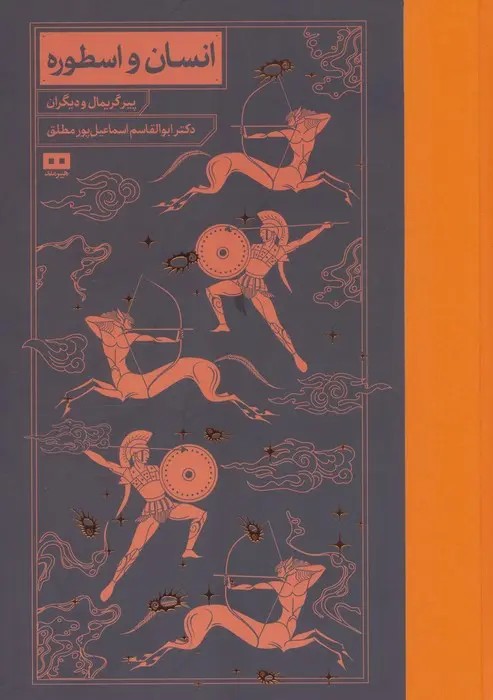
At the beginning of the current century, specialized mythologists sought to convince us that myth belongs to a specific stage of primitive human thought. They argued that, before the human mind began to perceive the world through the lens of reason, it viewed the universe as a dramatic arena of conflict between various desires. These mythologists—with a somewhat one-sided perspective—asserted that every human society, in the course of its historical evolution, was inevitably bound to pass through a pre-logical phase—a period in which myth served as the standard mode of thought. Following this stage came the "age of philosophers," which was succeeded by the "age of scientists"—discoverers of rational and objective truths.
Both myth and science share the same objective: to explain the world and make sense of its phenomena. Like science, myth seeks to equip human beings with the means to influence the cosmos, providing them with the assurance that they possess it—both materially and spiritually. Within this contingent universe—which often appears profoundly ambiguous and mysterious—myth represents the human element. When phenomena such as clouds, sunlight, or sea storms—and other forces that transcend the human realm—are endowed with the same sensibilities, intentions, and motivations that individuals experience in their daily lives, their formidable and terrifying nature is diminished.